A visual life timeline allows you to organize memories, photos, and experiences into a clear chronological story. Instead of losing moments in scattered folders, your life becomes a visual narrative.
A visual life timeline is a structured way to document and view the important moments of your life in chronological order.
Instead of storing memories in disconnected places such as photo galleries, notes, or social media feeds, everything is organized into a timeline.
This format makes it easier to understand how experiences unfold over time.
Each entry becomes a point on the timeline representing a meaningful moment.
When these moments are arranged visually, they form a narrative of personal experiences.
A visual life timeline transforms scattered memories into a coherent story that can be revisited at any time.
Humans naturally understand stories through sequences of events.
We remember experiences by connecting one moment to another.
This is why timelines are such powerful tools for organizing information.
History books, documentaries, and personal journals all rely on chronological structure.
When events are presented in order, it becomes easier to understand how one moment leads to another.
A life timeline app applies this concept to personal experiences.
Instead of remembering isolated events, users can see how moments connect across months and years.
Modern smartphones allow people to capture enormous numbers of photos and notes.
However, these memories often become scattered across multiple apps.
Photos remain inside camera rolls.
Notes may be stored in separate note-taking apps.
Important events may appear briefly on social media timelines before disappearing into older posts.
This fragmentation makes it difficult to see the larger picture of one's life.
A visual memory timeline brings these experiences together in one place.
One of the most powerful aspects of a timeline is its ability to reveal patterns.
When moments are placed in chronological order, they begin to form a narrative.
This narrative can reveal how life evolves over time.
For example, users may see how travel experiences expanded over several years.
They may notice how career milestones occurred during certain periods.
Creative projects, relationships, and achievements all become visible as parts of a larger story.
A digital life story timeline helps transform memories into a meaningful narrative.
At first glance, social media feeds might appear similar to a timeline.
However, their purpose is very different.
Social media feeds prioritize engagement.
Algorithms determine which posts appear in the feed.
Content from other users often dominates the experience.
This means personal memories are mixed with recommended content, advertisements, and trending posts.
A personal life timeline app removes these distractions.
Instead of competing content streams, users see their own experiences arranged chronologically.
Visual organization can make information easier to understand.
When memories appear in a visual structure, users can quickly grasp how experiences relate to each other.
A timeline view allows individuals to scroll through months or years of memories.
Photos, reflections, and events appear in sequence.
This visual flow helps the brain process information more naturally.
A photo life timeline combines imagery and chronology to create a powerful memory tool.
Not every timeline entry needs to represent a major life milestone.
In fact, many of the most meaningful memories come from everyday experiences.
Users often choose to record moments such as:
Each moment becomes another point on the timeline.
Over time, these entries accumulate into a detailed map of life events.
DoMind provides tools that allow users to capture and organize life experiences into a visual timeline.
Instead of scattered notes and photos, moments can be recorded as structured entries.
Each entry represents a specific experience or memory.
Users can attach multiple photos along with written reflections that describe the moment.
These entries are automatically organized chronologically.
This creates a timeline that grows naturally as new experiences are recorded.
A timeline entry becomes much more powerful when it includes both images and text.
Photos capture the visual details of an experience.
Written reflections explain the meaning behind it.
This combination allows users to remember not only what happened, but also how they felt.
For example, a travel entry might include photos of a destination along with notes describing the atmosphere, the people present, and the significance of the moment.
This context transforms a simple photo into a lasting memory.
As more entries are added, the timeline gradually becomes a personal archive.
This archive contains years of experiences organized into a clear chronological structure.
Users can scroll through the timeline and revisit earlier stages of life.
They may rediscover moments that had been forgotten.
The archive might include:
This archive becomes a visual representation of personal history.
Many digital platforms compete aggressively for attention.
Notifications, trending posts, and endless feeds encourage constant engagement.
A visual life timeline offers a different experience.
Instead of capturing attention, the tool simply supports memory keeping.
Users open the app intentionally when they want to record a moment or revisit past experiences.
This creates a calmer and more intentional relationship with technology.
Every life contains thousands of meaningful moments.
Without a system for documenting them, many of these experiences fade from memory.
A visual life timeline provides a structure for preserving these moments.
Each entry adds another point to the timeline.
Over months and years, these points form a detailed narrative of experiences.
Instead of being lost inside scattered apps and folders, memories remain organized and accessible.
In a world dominated by fast-moving content feeds, a personal visual timeline offers something rare.
A clear and meaningful view of your own life story.
See your entire day visually in one place with DoMind's visual daily planner and task overview.
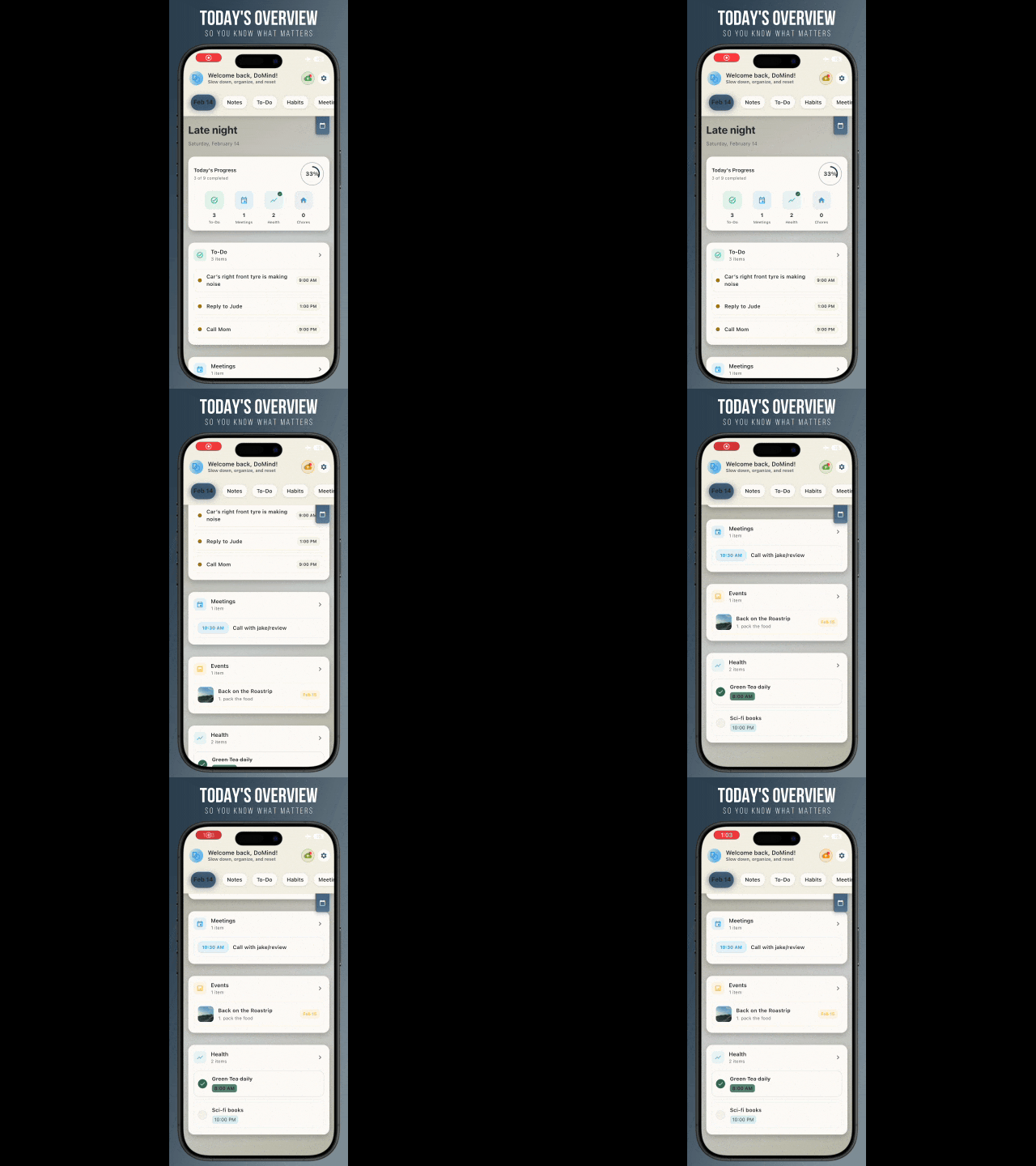
A clean visual planner designed for focus and calm.
Your life, organized
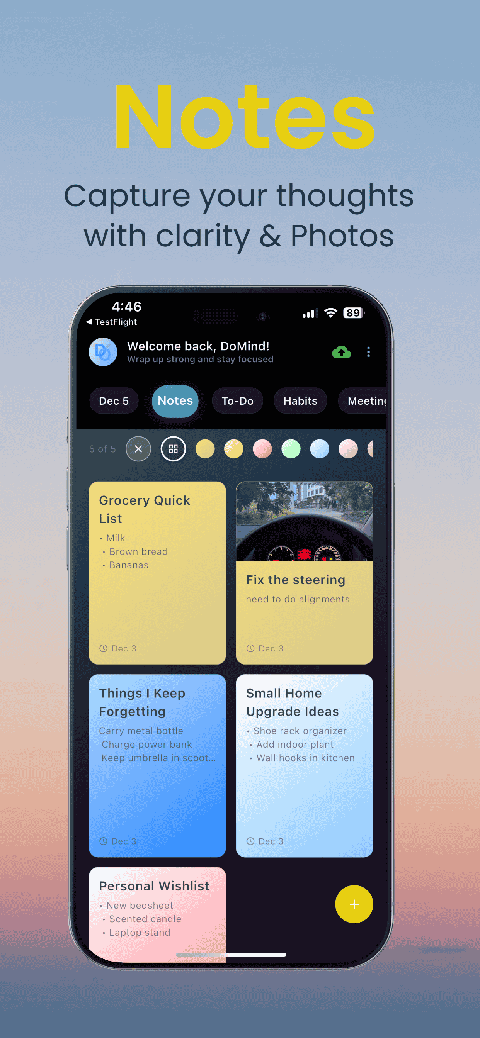
Visual notes
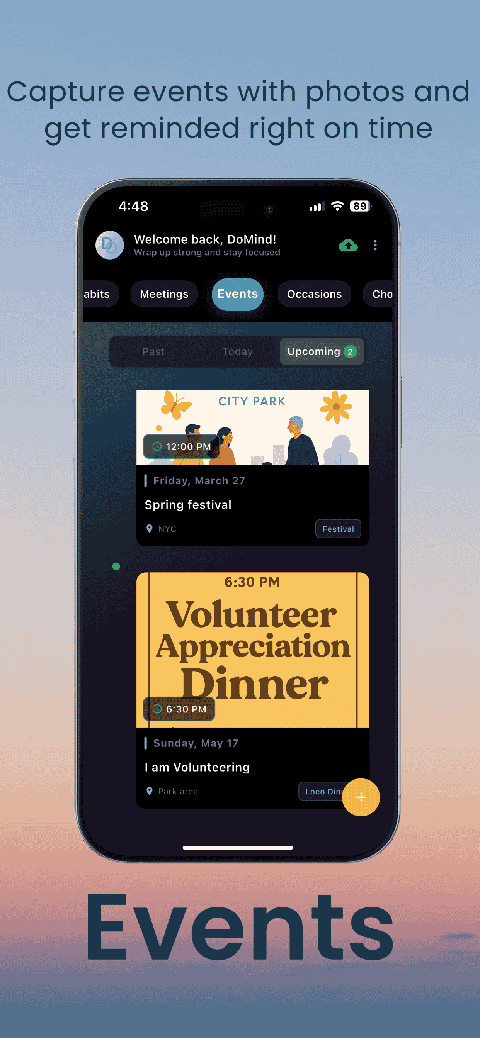
Plan events
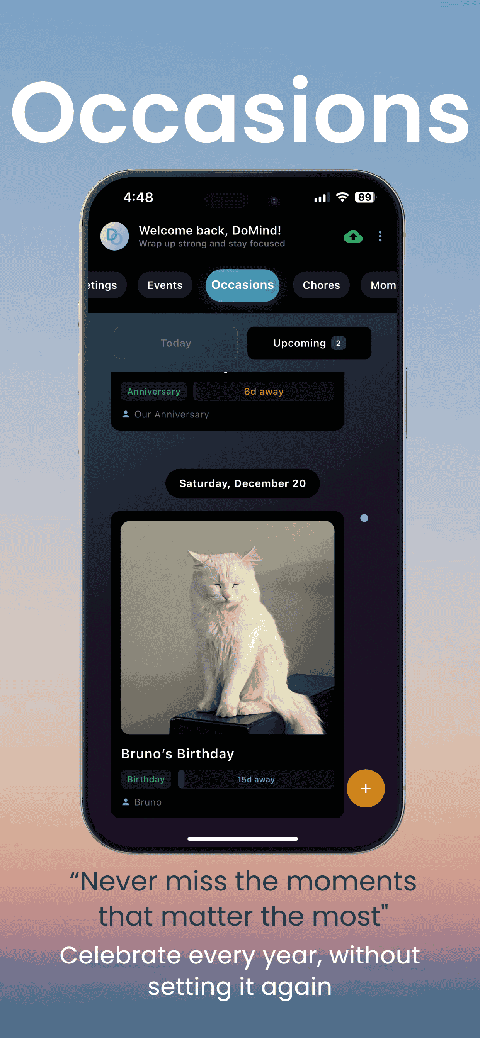
Private memories
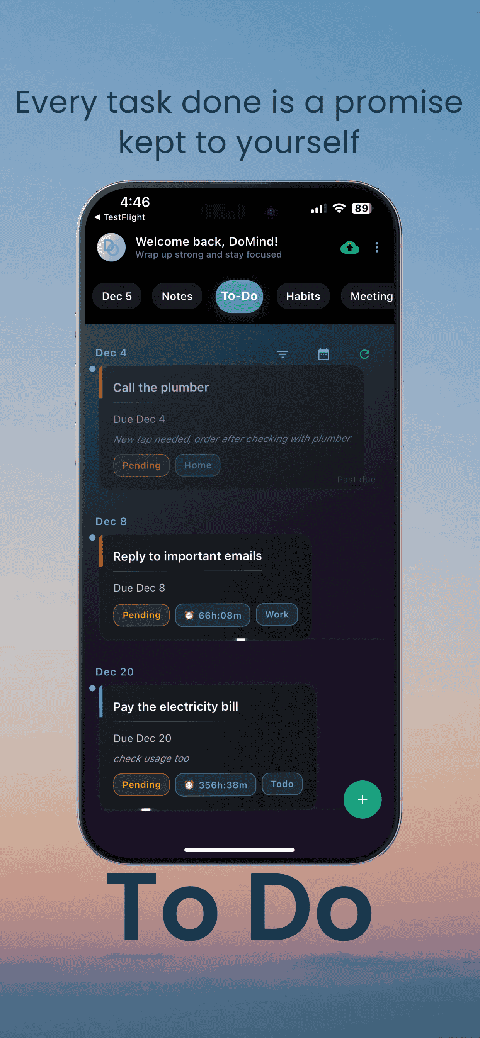
Manage tasks visually
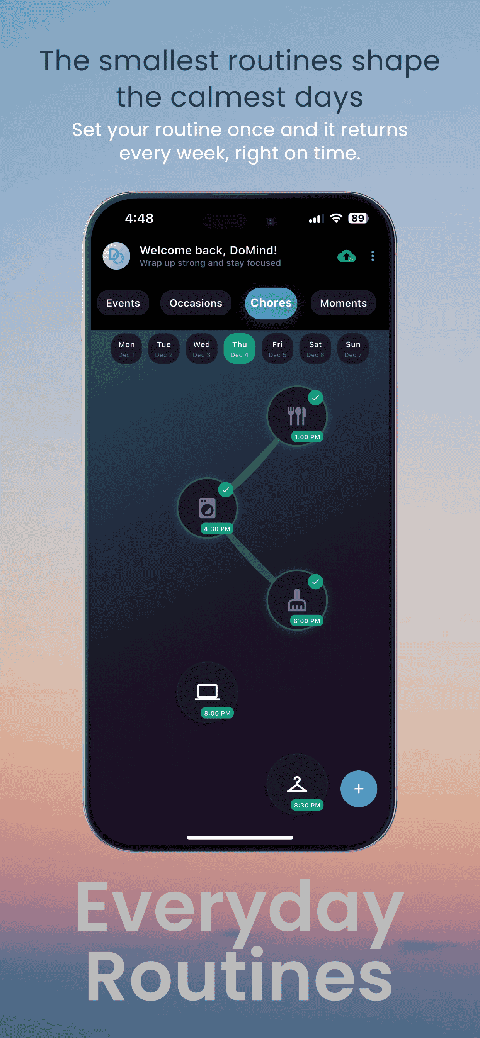
Choose themes
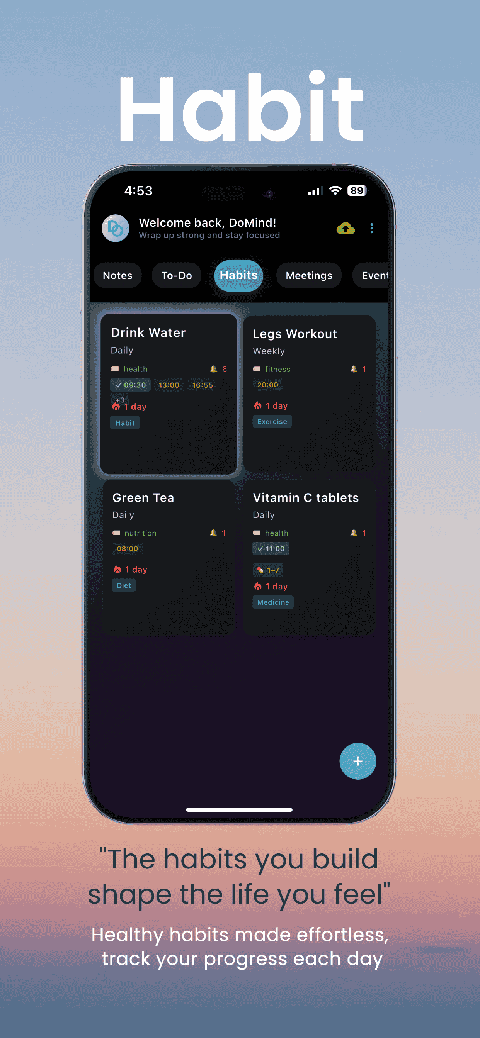
Track habits

Organize routines
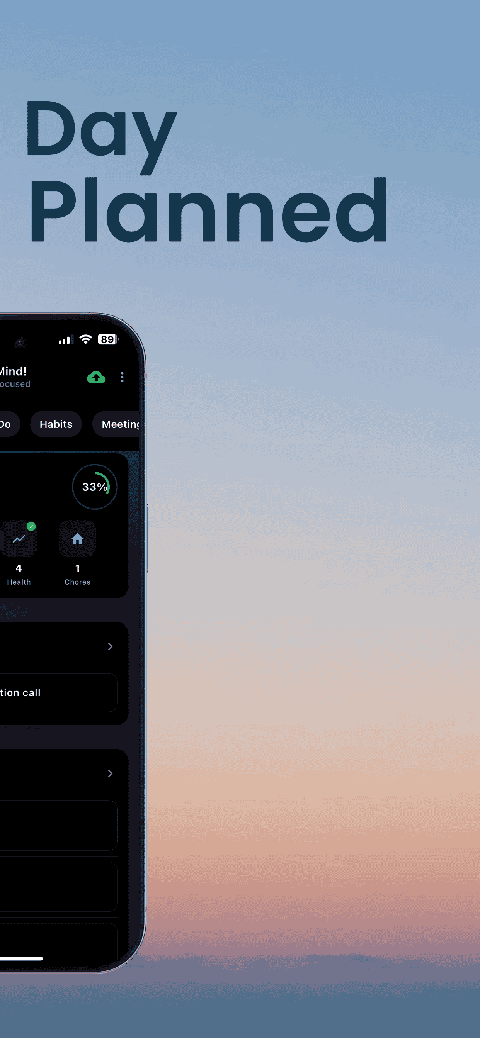
Visual experience
Calm interface
Standard planners feel like a wall of text. They trigger overwhelm.
Download DoMind free — the visual planner that respects your privacy.