Visual habit building makes it easier to maintain routines by showing progress clearly. Seeing habits visually can increase motivation and consistency.
Visual habit building is a method of developing routines by tracking progress in a visible way.
Instead of relying only on memory or motivation, individuals can see how consistently they complete their habits.
This visual feedback helps reinforce behavior.
When progress becomes visible, people are more likely to continue the routine.
A visual habit building approach turns daily actions into a system that can be observed and improved over time.
Many aspects of life are shaped by small daily actions.
Habits influence health, productivity, learning, and personal growth.
Actions such as reading, exercising, or reflecting each day may seem small individually.
However, these actions accumulate over time.
Consistent habits often produce long-term results that occasional effort cannot achieve.
A habit building system helps transform intentions into consistent routines.
Starting a new habit is often easier than maintaining it.
Many people begin with strong motivation, but that motivation can fade.
Busy schedules, distractions, or forgetfulness may interrupt routines.
Without a clear system, habits can disappear quickly.
This is where tracking becomes valuable.
A visual habit tracker allows individuals to monitor progress and maintain consistency.
The human brain responds strongly to visual patterns.
Seeing progress displayed visually makes achievements easier to recognize.
Each completed habit becomes part of a visible streak or pattern.
This pattern reinforces motivation.
Breaking the streak becomes less appealing because progress is clearly visible.
A habit progress visualization system encourages individuals to continue their routines.
Habit tracking works partly because it creates accountability.
When people record their actions, they become more aware of their behavior.
This awareness increases the likelihood of completing the habit again.
Additionally, tracking introduces small moments of reward.
Marking a habit as complete can create a sense of progress.
A visual routine tracker makes these rewards more noticeable.
People build habits for many reasons.
Some routines support physical health, while others encourage learning or reflection.
Examples of common habits include:
A build habits visually approach allows individuals to track these routines consistently.
Consistency is the foundation of habit development.
Even small routines require repeated action to become automatic.
Visual tracking helps maintain this consistency.
When users see their progress clearly, they gain a sense of momentum.
Missing a day becomes noticeable.
This awareness often encourages individuals to continue their streak.
A visual habit building system makes progress easy to observe.
Many people work on more than one habit simultaneously.
For example, someone might try to exercise regularly while also reading each day.
Tracking multiple routines can become confusing without a system.
A visual habit tracker allows individuals to manage several habits within the same environment.
Each habit can be tracked independently.
This structure helps users see how different routines develop over time.
DoMind provides tools designed to support habit tracking.
Users can create habits representing routines they want to develop.
These habits may repeat daily, weekly, or at specific times.
Progress is recorded visually, allowing users to see how consistently they complete their routines.
This visibility helps reinforce behavior.
Over time, the visual record becomes a powerful motivator.
Not all habits occur every day.
Some routines may happen only on certain days of the week.
Others may occur multiple times in a single day.
A visual habit tracker should allow flexible scheduling.
This flexibility allows individuals to design routines that match their lifestyles.
When habits align with real schedules, they become easier to maintain.
Habit tracking is not just about daily completion.
Over time, habits become part of larger life systems.
For example, a reading habit may contribute to long-term learning goals.
A writing habit may support creative projects.
A habit building system connects these daily routines to broader personal growth.
Visual habit tracking also allows users to observe progress across weeks and months.
Instead of focusing only on individual days, individuals can see long-term patterns.
This perspective helps users recognize improvement.
Even small routines become meaningful when viewed across long periods.
A habit progress visualization approach makes this growth visible.
Motivation often fluctuates.
Some days feel productive, while others feel difficult.
Habits help reduce reliance on motivation.
When routines are tracked consistently, they become automatic behaviors.
A visual system reinforces this consistency.
Instead of relying on motivation, individuals follow the structure they have created.
Over time, habits influence many aspects of life.
Health, learning, creativity, and personal development all depend on repeated actions.
By tracking routines visually, individuals gain greater awareness of their behavior.
This awareness helps maintain consistency.
A visual habit building approach transforms small daily actions into long-term personal growth.
With clear progress and structured routines, habits gradually become part of everyday life.
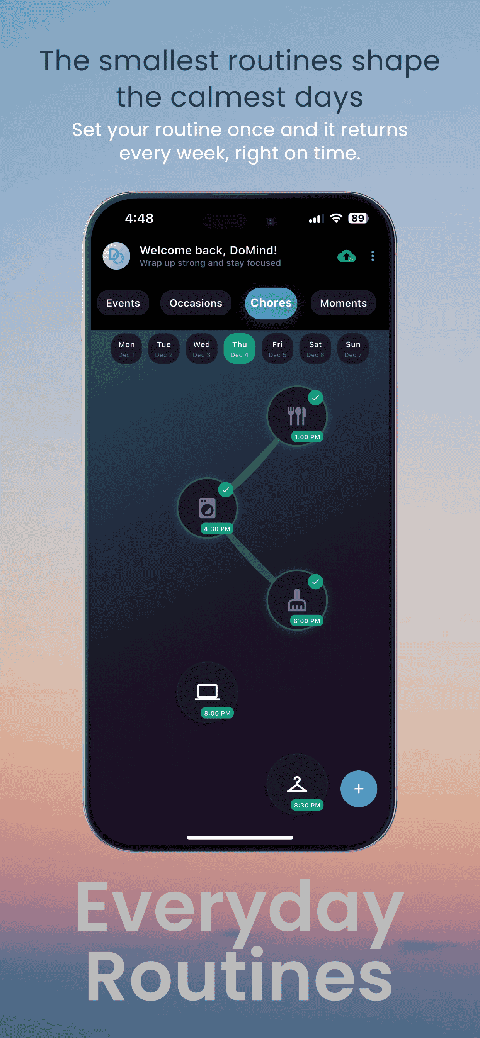
See your entire day visually in one place with DoMind's visual daily planner and task overview.
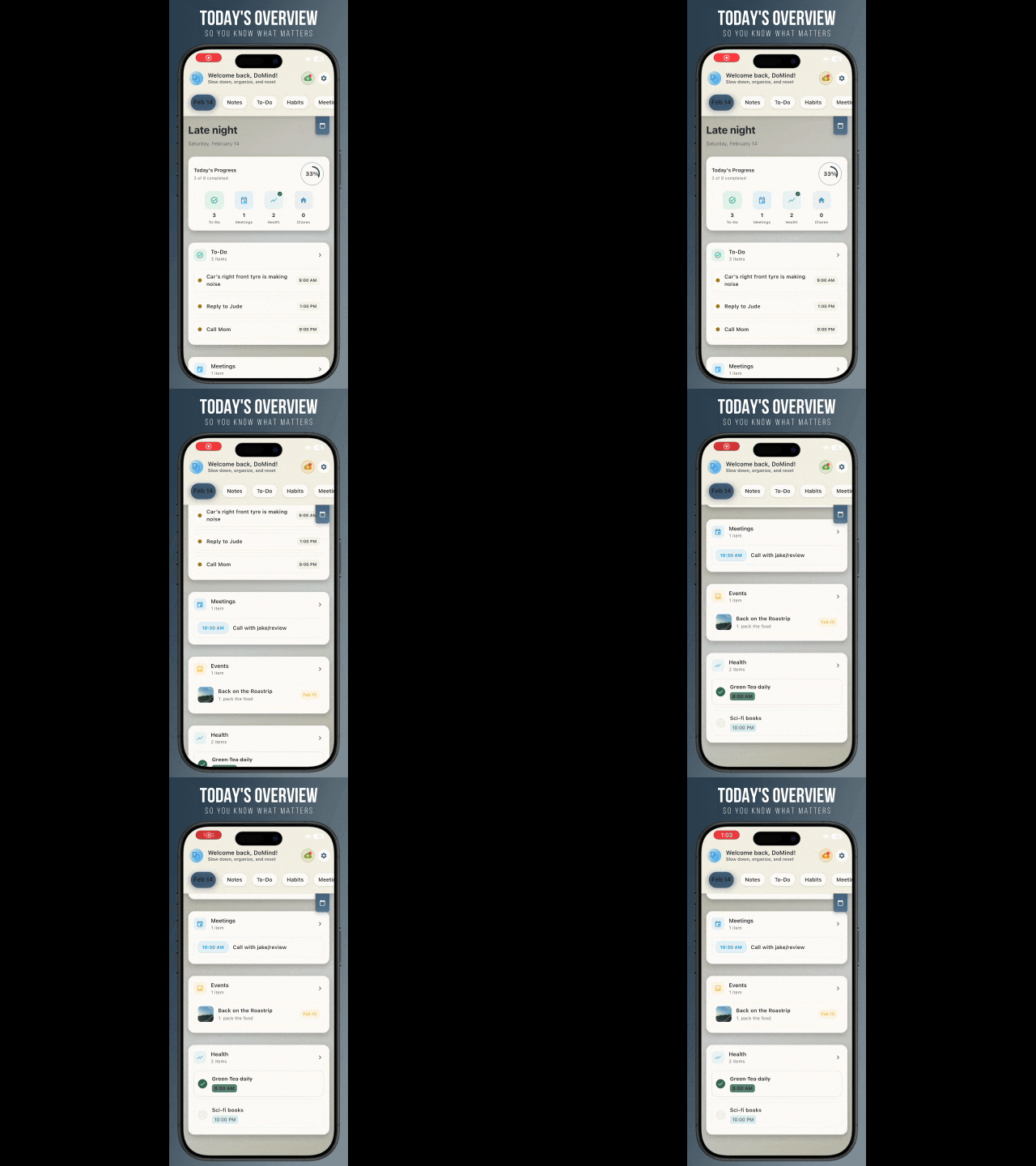
A clean visual planner designed for focus and calm.
Your life, organized
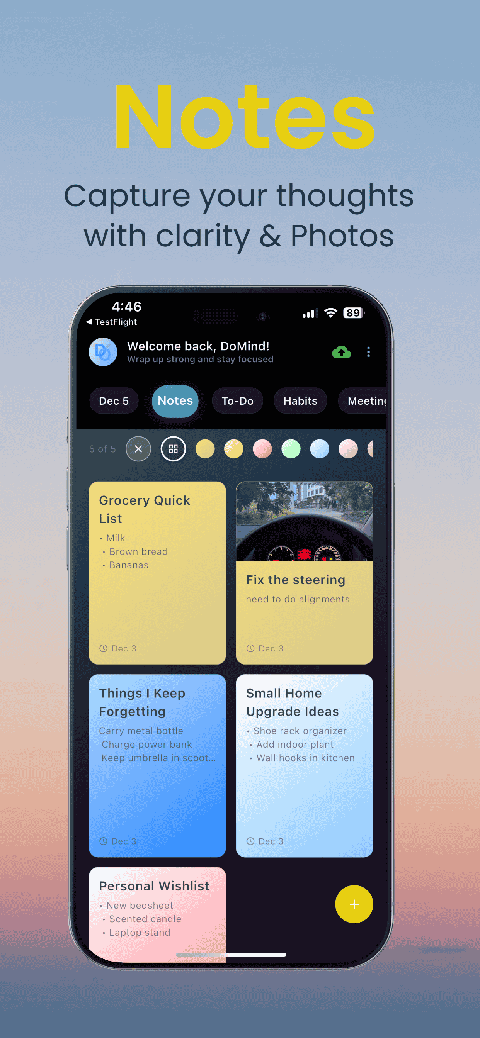
Visual notes

Plan events
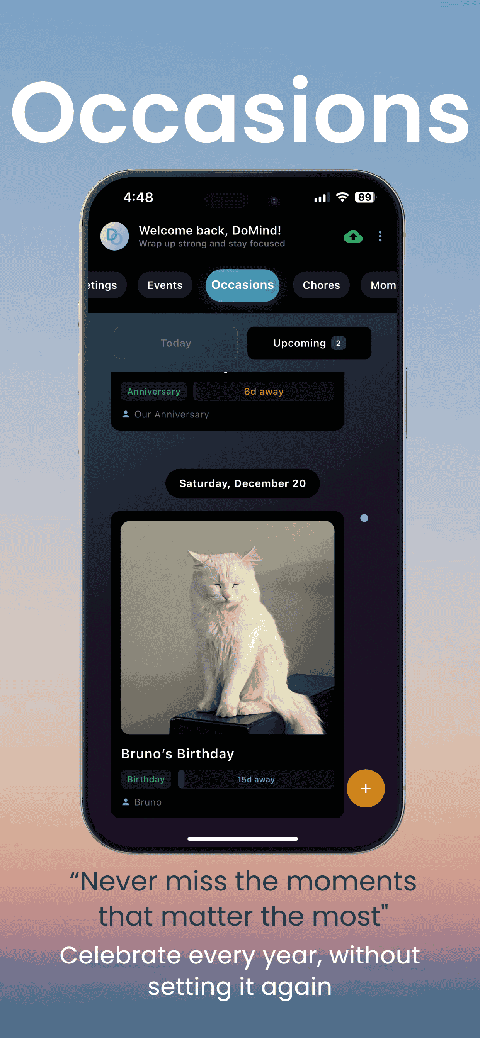
Private memories
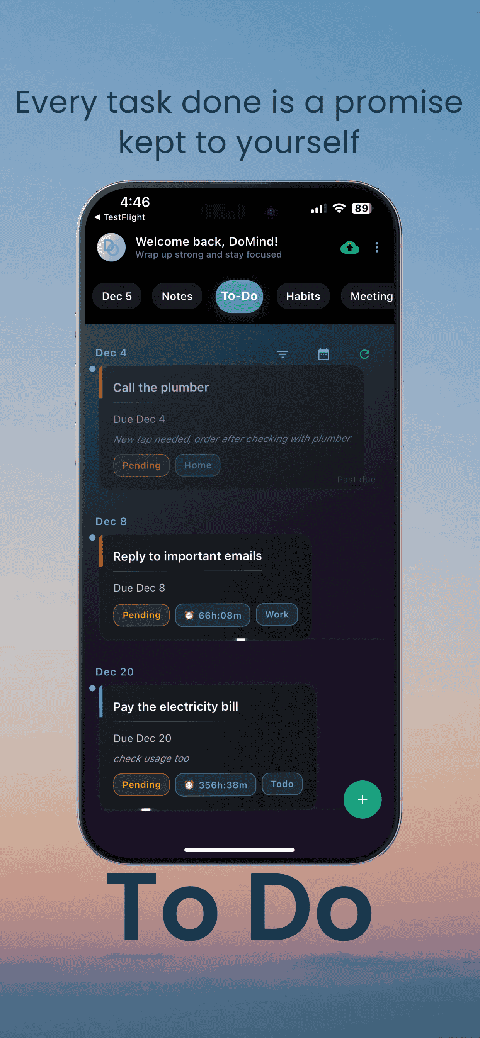
Manage tasks visually
Choose themes
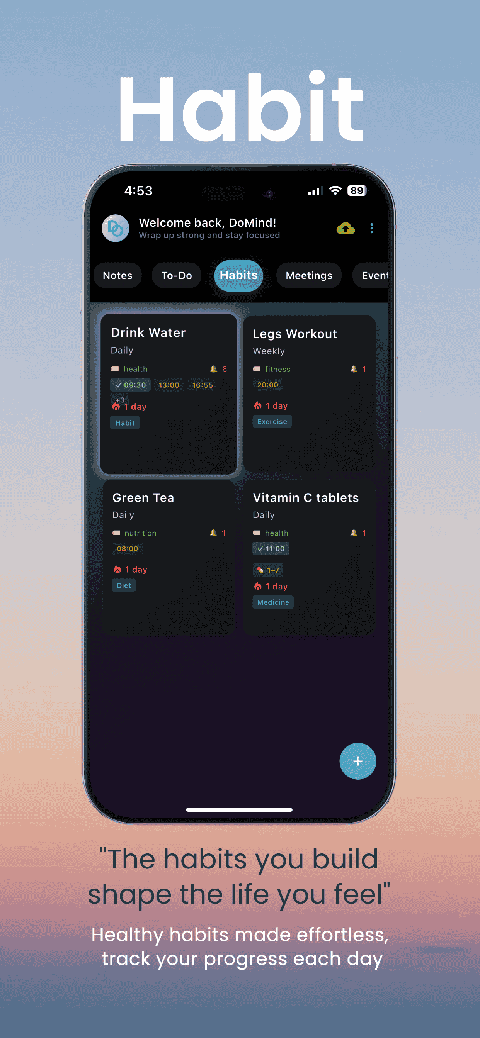
Track habits

Organize routines

Visual experience

Calm interface
Standard planners feel like a wall of text. They trigger overwhelm.
Download DoMind free — the visual planner that respects your privacy.