The endless wall of text is your absolute worst enemy. By turning tasks into bite-sized visual blocks, DoMind drastically lowers the barrier to entry.
Most people have experienced moments where they know exactly what needs to be done but still cannot seem to begin.
For individuals with ADHD, this experience can happen frequently and intensely. It is often referred to as task paralysis.
Task paralysis occurs when the brain becomes overwhelmed by a task, making it difficult to start even when the intention is clear.
You may look at your to-do list and feel stuck. The tasks might be important or even urgent, but something prevents the first step from happening.
This experience is closely related to executive dysfunction, where the brain struggles with task initiation, planning, and prioritization.
Instead of moving forward, the brain pauses.
This pause can last minutes, hours, or sometimes an entire day.
Task paralysis is not about laziness or lack of motivation. It is usually the result of cognitive overload.
Several factors contribute to this experience:
When the brain cannot quickly determine where to start, it often delays action entirely.
This is why traditional productivity advice sometimes fails for ADHD. Simply writing a longer to-do list can make the problem worse.
The solution is not more tasks — it is clearer tasks.
Many productivity tools rely heavily on long lists of text.
While lists can be helpful for capturing tasks, they can also become overwhelming when they grow too large.
When you open a planner and see dozens of tasks at once, the brain may struggle to decide where to begin.
This often triggers analysis paralysis.
Instead of acting, the brain begins analyzing every possible starting point. The result is hesitation and delay.
Reducing visual overwhelm is one of the most effective ways to break this cycle.
One of the most effective strategies for overcoming task paralysis is breaking large tasks into smaller, manageable actions.
Instead of writing a task like:
Finish project
You might break it into steps such as:
Each step becomes easier to start because the task is now clearly defined.
Small steps reduce resistance and create momentum.
Once movement begins, continuing the task becomes much easier.
Another powerful strategy is converting tasks from long text lists into visual structures.
A visual planning system allows tasks to appear as clear blocks instead of dense paragraphs of text.
This helps the brain process information faster.
Instead of scanning an intimidating list, you can simply glance at your planner and see the next step.
Visual organization reduces cognitive load and makes planning feel calmer.
DoMind was designed to reduce the friction that often leads to task paralysis.
Instead of overwhelming users with complicated productivity frameworks, the app focuses on simple visual planning.
Tasks appear as visual blocks that are easy to understand and move around.
This helps users quickly see:
By reducing visual overload, the barrier to starting tasks becomes smaller.
Sometimes tasks remain stuck because they exist only as vague ideas.
Capturing those ideas inside a structured system helps turn them into actionable plans.
Within DoMind, users can organize different types of information in one place:
This unified system makes it easier to translate intentions into concrete actions.
Many responsibilities repeat regularly.
For example:
Manually recreating these tasks every time can add unnecessary friction.
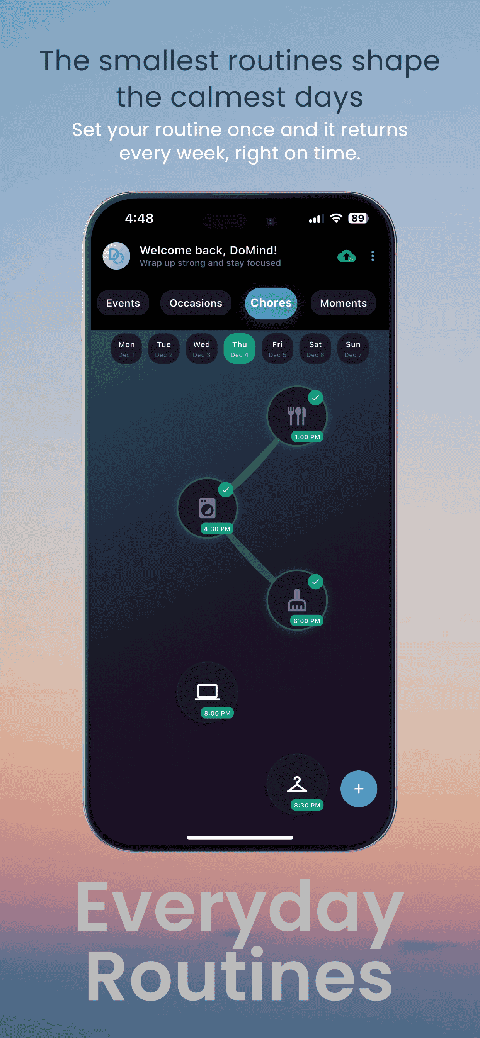
DoMind allows users to create recurring tasks that automatically appear again.
These recurring tasks can:
This reduces planning effort and keeps routines running smoothly.
Some people benefit from reminders that prompt them to begin tasks.
Others prefer a quieter planning environment without constant notifications.
DoMind supports both approaches.
Users can choose to:
This flexibility allows each person to design a system that works with their attention style.
Momentum is one of the most powerful productivity drivers.
Once you complete one small step, the brain becomes more willing to continue.
This is why starting is often the hardest part.
By breaking tasks into smaller actions and presenting them visually, DoMind helps lower the barrier to starting.
Each completed task becomes a small win.
Small wins build momentum.
Momentum helps overcome paralysis.
Task paralysis can make productivity feel frustrating and unpredictable.
Knowing what to do is not always the same as starting.
Effective productivity systems focus on reducing friction rather than increasing pressure.
Visual planning, smaller tasks, and clear structure make it easier to begin.
DoMind combines these principles into a simple environment where tasks, notes, routines, and events exist together.
When planning becomes clearer and tasks feel manageable, the wall between intention and action becomes much smaller.
Instead of feeling stuck, you can take the first step — and momentum will carry you forward.
See your entire day visually in one place with DoMind's visual daily planner and task overview.
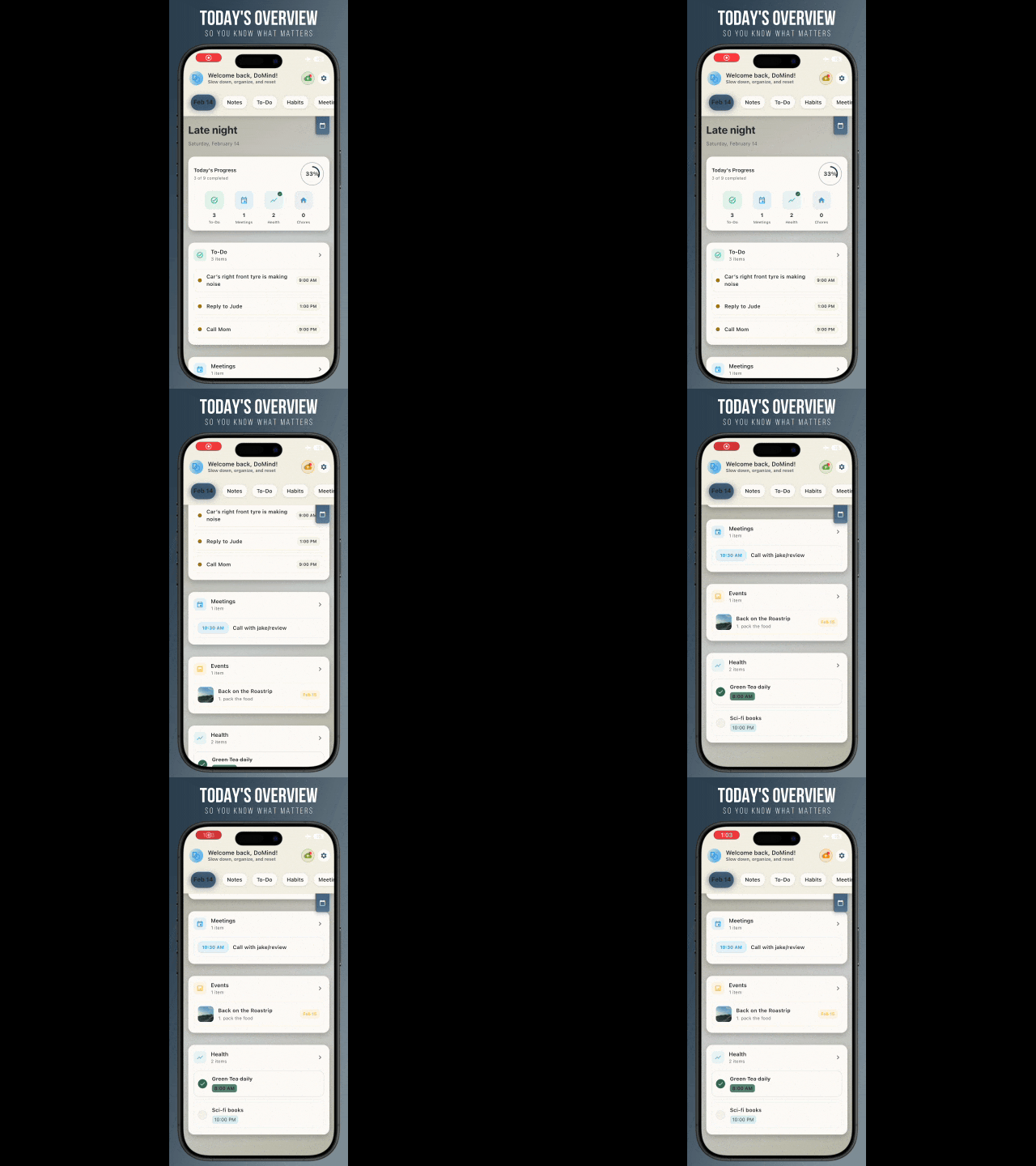
A clean visual planner designed for focus and calm.
Your life, organized
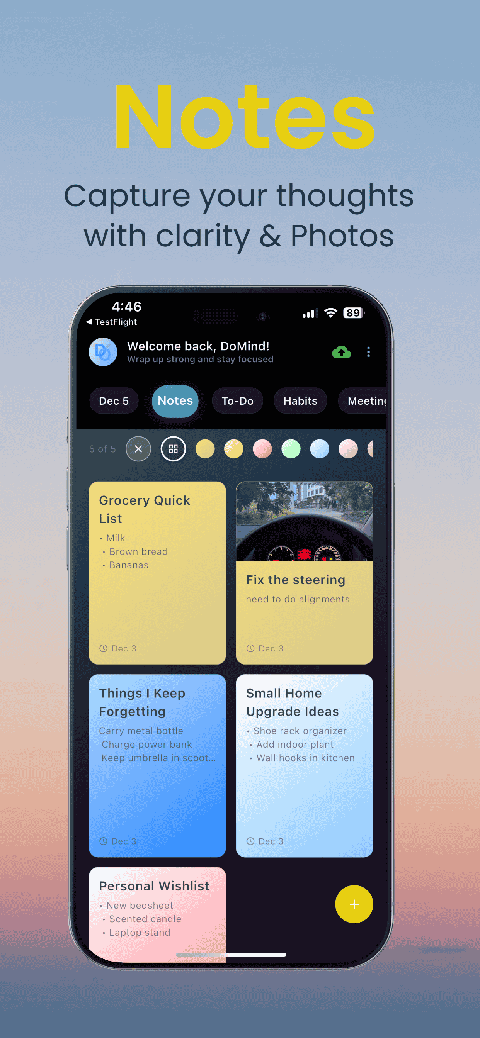
Visual notes

Plan events

Private memories
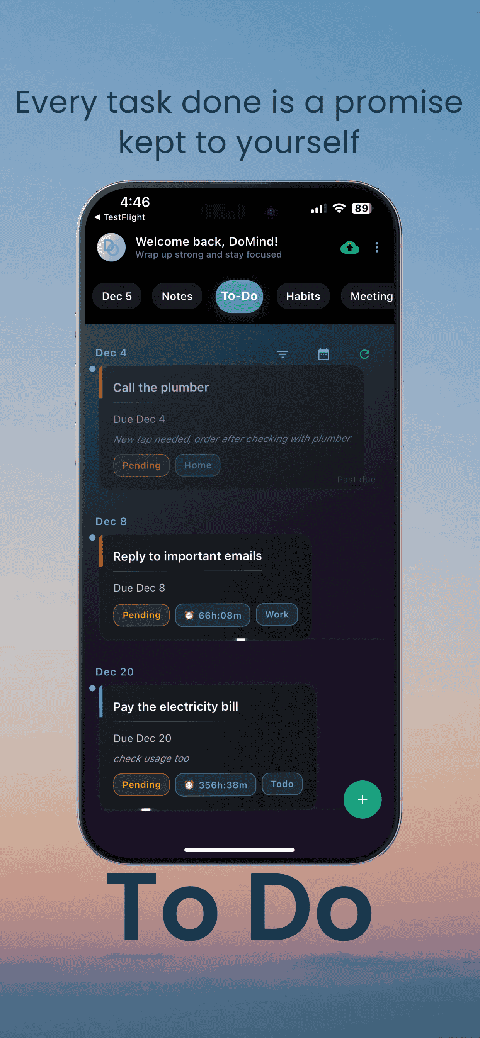
Manage tasks visually
Choose themes
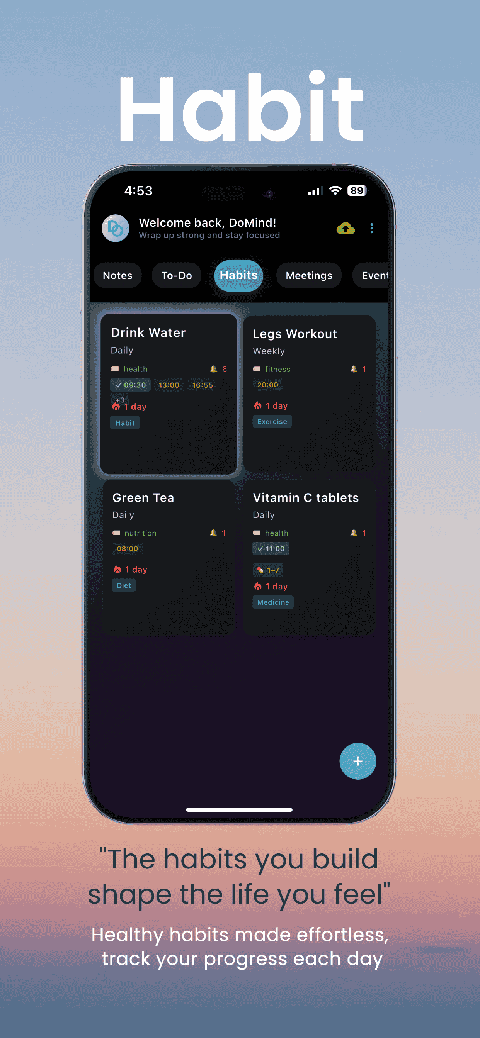
Track habits

Organize routines

Visual experience
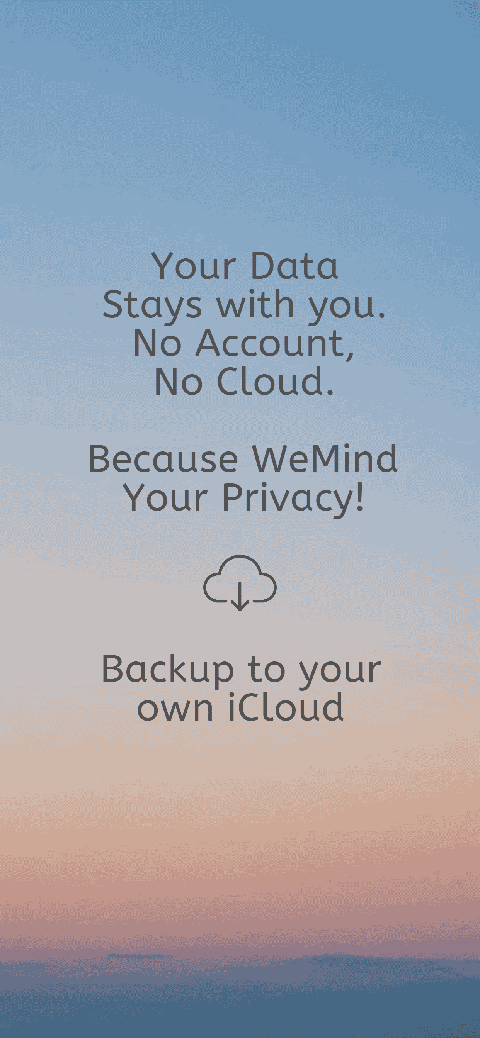
Calm interface
Standard planners feel like a wall of text. They trigger overwhelm.
Download DoMind free — the visual planner that respects your privacy.