When 'just doing it' feels physically impossible, DoMind helps you bridge the gap between intention and action with ultra-low-friction visual planning.
Many productivity systems assume that people can simply decide to do something and then start doing it.
But for individuals experiencing executive dysfunction, the gap between intention and action can feel enormous.
You may know exactly what needs to be done. The task might even be important or urgent. Yet starting it feels surprisingly difficult.
This experience is sometimes described as hitting an invisible wall.
Executive dysfunction can affect several everyday abilities:
These challenges are common for individuals with ADHD, but they can also appear during stress, burnout, or periods of mental overload.
Tools designed specifically for executive dysfunction help can make everyday tasks easier to start and complete.
One of the most frustrating aspects of executive dysfunction is difficulty with task initiation.
Even simple tasks may feel overwhelming when the brain struggles to transition from planning to action.
This can create a cycle that many people recognize:
This pattern is often called ADHD paralysis or task paralysis.
It is not laziness or lack of motivation. Instead, the brain struggles to organize and initiate action.
Reducing friction is one of the most effective ways to overcome this barrier.
When tasks feel large or complicated, the brain naturally resists starting them.
A helpful strategy is to make tasks smaller and clearer.
An executive dysfunction app can support this process by breaking responsibilities into manageable pieces.
Instead of seeing a single overwhelming project, users can view a simple list of smaller actions.
This approach changes the mental experience of the task.
Instead of thinking “I need to finish everything,” the brain focuses on completing just one small step.
Small steps reduce resistance and make action easier.
Another challenge associated with executive dysfunction is feeling overwhelmed by large lists of responsibilities.
Traditional productivity apps often present tasks as long text lists that grow larger every day.
For many people, this format can make tasks appear even more intimidating.
A visual planning system presents tasks in a clearer and more manageable way.
Instead of scanning dense lists, users can quickly understand what needs attention.
Visual structure helps the brain process information faster and reduces the feeling of overload.
This makes it easier to decide where to begin.
Executive dysfunction often creates a disconnect between intentions and actions.
You may plan to complete several tasks during the day, but without structure those plans can remain abstract.
A task initiation tool helps bridge this gap.
By turning intentions into clearly visible actions, the brain receives a concrete starting point.
Instead of wondering what to do next, the next step becomes obvious.
This simple shift can significantly improve momentum.
Procrastination is often misunderstood.
Many people assume it is simply a lack of discipline, but for individuals experiencing executive dysfunction, procrastination is usually a symptom of cognitive overload.
When the brain cannot easily organize tasks, delaying them becomes a temporary coping mechanism.
A well-designed ADHD productivity tool reduces procrastination by simplifying the planning process.
When tasks are easy to understand and quick to start, the barrier to action becomes smaller.
This creates momentum that helps users continue working.
Executive function refers to a group of mental processes that help us plan, prioritize, and complete tasks.
When these systems become overloaded, external tools can provide helpful support.
Instead of relying entirely on mental organization, users can store tasks inside a structured system.
This external support reduces mental effort.
Tasks no longer need to be remembered or constantly re-evaluated. The system holds the structure so the brain can focus on action.
This is why many people benefit from using executive function productivity tools.
Progress often begins with small victories.
Completing even a tiny step can change how a task feels.
Once the brain experiences progress, motivation tends to increase naturally.
This is why many executive dysfunction strategies focus on creating quick wins.
Examples include:
Each completed action builds momentum.
Momentum makes the next step easier.
Large projects can feel intimidating because they appear vague and undefined.
The brain may struggle to identify where to begin.
A helpful strategy is to convert large tasks into visible steps.
A structured planning system allows users to organize projects in a way that feels manageable.
Instead of a single overwhelming task, the project becomes a sequence of achievable actions.
This structure removes much of the uncertainty that leads to task avoidance.
Many productivity tools assume ideal working conditions. They expect users to remain consistently motivated and organized.
But real life rarely works this way.
Energy levels fluctuate, attention shifts, and stress can interfere with planning.
Tools designed for executive dysfunction help focus on reducing barriers rather than increasing complexity.
These systems typically emphasize:
When tools match real human behavior, they become easier to maintain.
The most important step in any task is simply beginning.
Once action starts, progress becomes much easier to maintain.
An app designed for executive dysfunction focuses on making that first step less intimidating.
By reducing complexity, organizing tasks visually, and supporting small actionable steps, planning systems can help bridge the gap between intention and action.
DoMind was designed with these principles in mind.
Instead of overwhelming users with complicated productivity frameworks, it provides a calm and simple environment where tasks can be organized and started with minimal friction.
When starting becomes easier, momentum builds naturally — and even difficult tasks become manageable.
See your entire day visually in one place with DoMind's visual daily planner and task overview.
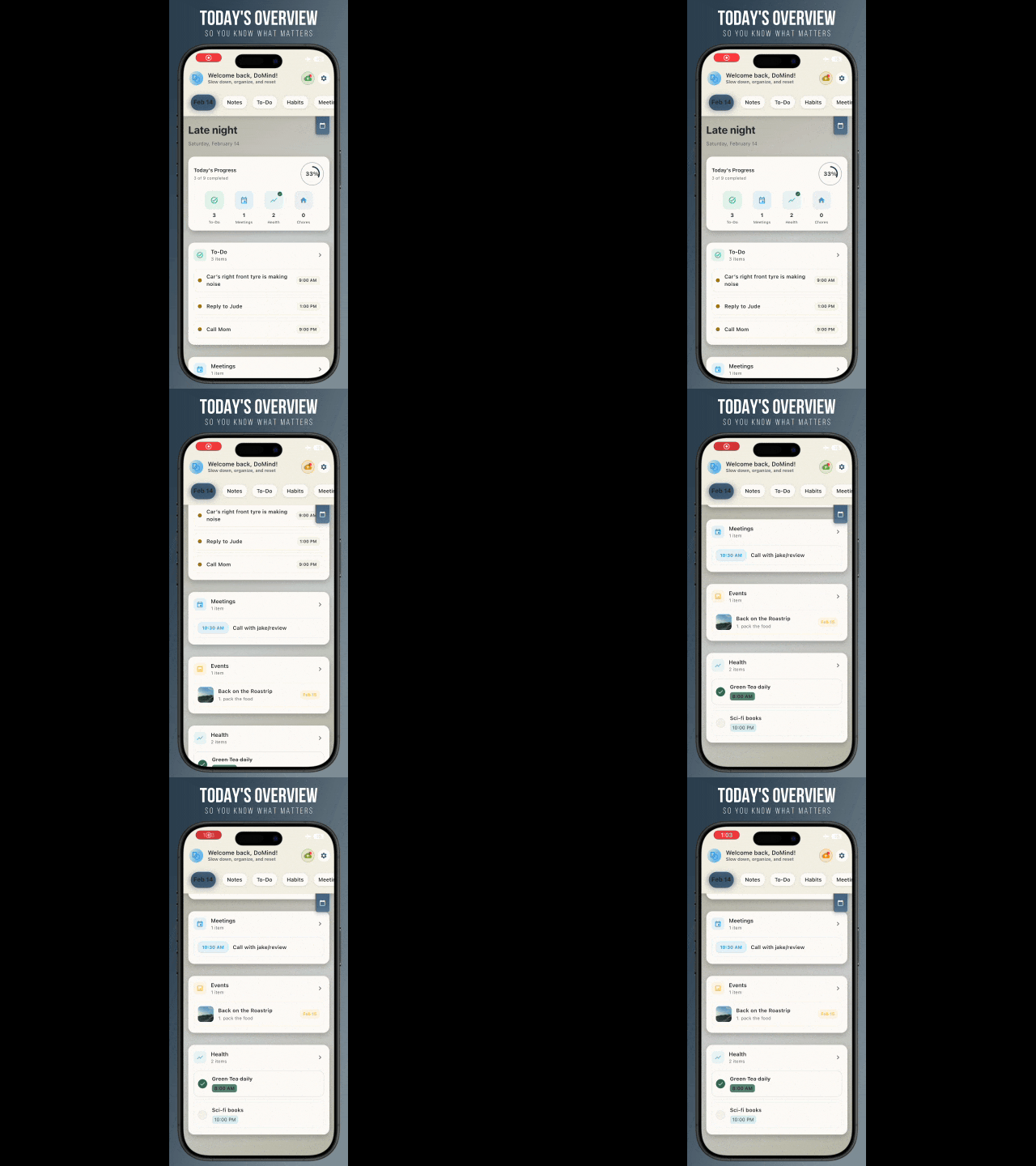
A clean visual planner designed for focus and calm.
Your life, organized
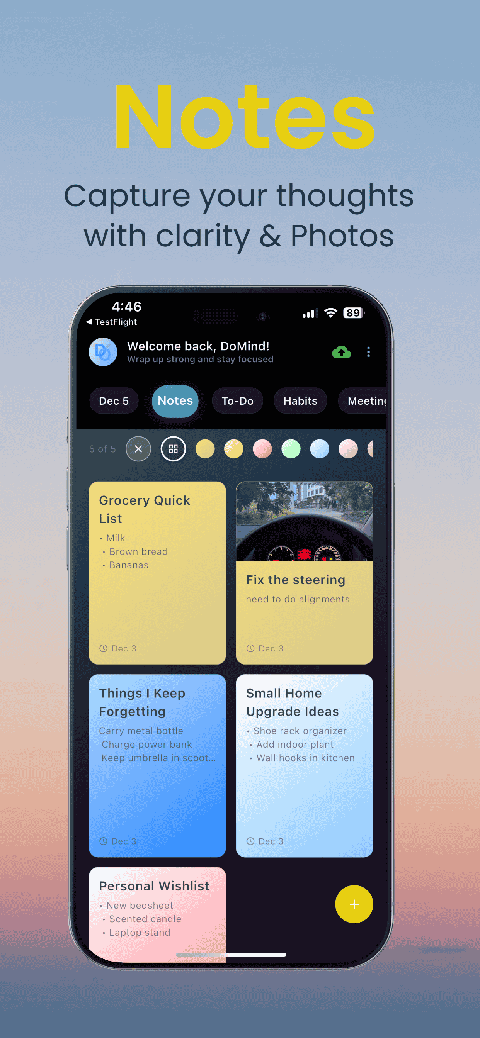
Visual notes

Plan events

Private memories
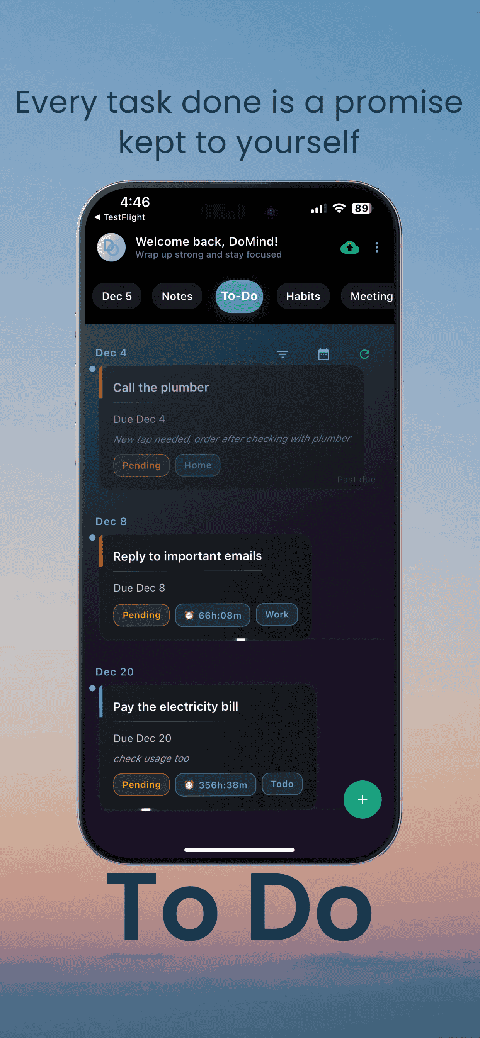
Manage tasks visually
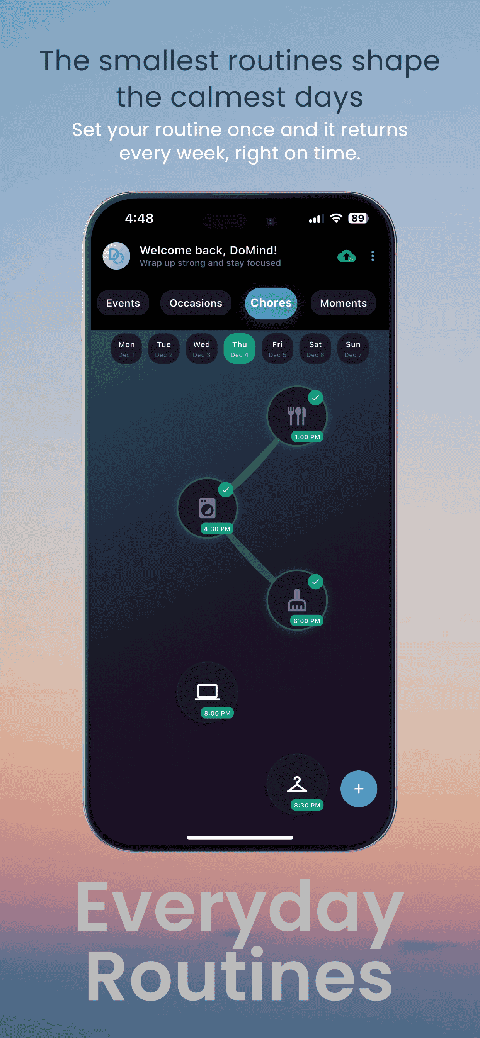
Choose themes
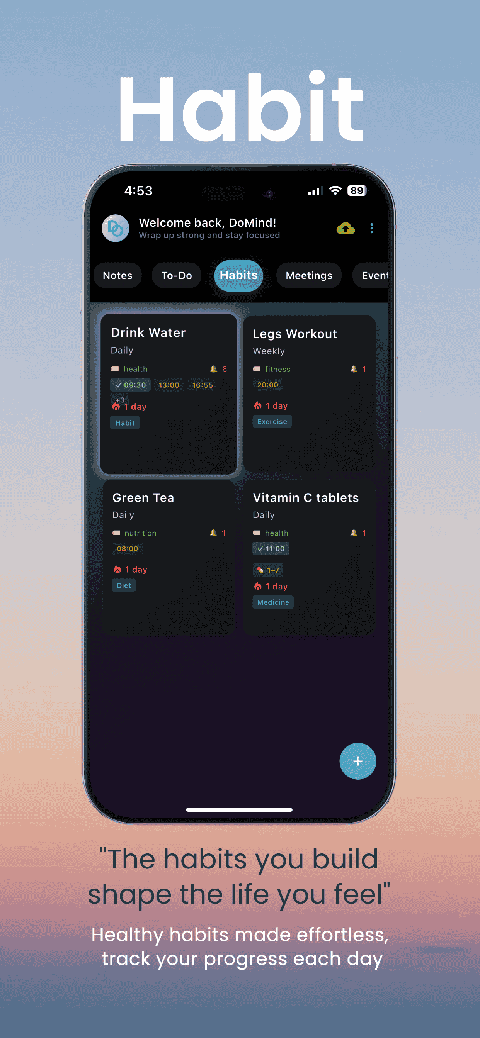
Track habits

Organize routines

Visual experience
Calm interface
Standard planners feel like a wall of text. They trigger overwhelm.
Download DoMind free — the visual planner that respects your privacy.